
Equity investors became poorer by over Rs 9.75 lakh crore in two days of heavy decline in the equity market, with the Sensex plunging 1,457 points on Monday. The 30-share BSE benchmark tanked 1,456.74 points or 2.68 per cent to settle at 52,846.70 on Monday. It had ended 1,016.84 points or 1.84 per cent lower at 54,303.44 on Friday.

Gita Gopinath, the IMF's Indian-American chief economist has been promoted as its First Deputy Managing Director recognising her exceptional intellectual leadership in helping the global economy and the Fund to navigate the "twists and turns" of the "worst economic crisis of our lives". Gopinath would replace Geoffrey Okamoto who plans to leave the International Monetary Fund early next year, Kristalina Georgieva, IMF's managing director announced on Thursday. Gopinath, who was scheduled to return to her academic position at Harvard University in January 2022, has decided to stay, she said. Gopinath, 49, has served as the first female chief economist of the Washington-based global lender for three years.

The poll panel also referred to the reported strong oral observations of the top court against it during the last hearing on the PIL on the issue, saying they have "caused irreparable damage to the reputation of this institution built over the years".

An aggressive rate hike by the US Fed and the possibility of a recession can trigger a slide in these stocks, which will be a good opportunity to buy from a long-term perspective.

Experts said the tensions have added to a sense of apprehension in the United States, Europe and parts of Asia that China will engage in more aggressive behaviour in pursuit of its territorial interests, which in turn has raised the possibility of a serious and coordinated pushback by leading global players.

If net forex outflows turn out to be relatively high in the next few years, the rupee could depreciate beyond Rs 80 to a dollar by 2022. The causal reasons could, for example, include unmet expectations of FPI and FDI investors about the performance of the Indian economy, sharp rise in prices of imported oil and decrease in FX remittances. The RBI has to ask itself whether guaranteeing future rupee-dollar exchange rates on FX forward contracts is a reasonable way to use its risk-bearing capacity, says Jaimini Bhagwati.

But the ISI chief did not retire giving the impression that he has won General Asim Munir's trust, notes Rana Banerji who headed the Pakistan desk at RA&W.

The RBI was not party to the decision to demonetize 500 and 1,000-rupee notes, which was taken at the highest level of India's political leadership.

India's economic growth accelerates to 7.4% in Sept quarter

'What gives hope is that Modi's own leadership is vitally linked to his capacity to deliver on the economic front. Indeed, if he succeeds, India's foreign policies will have changed beyond recognition,' feels Ambassador M K Bhadrakumar.

'Look at the number of billionaires, the number of new billionaires in India.' 'Adani and Ambani are not the only ones.' 'What's wrong with people making money as long as it benefits us?'

The fewer the number of central ministries that matter, the better the efficacy of India's reforms.

'It is far too early to celebrate the numbers.' 'They are still fairly weak compared to the pre-pandemic level.'

He spoke on 'public policy for inclusive development' before students of the post graduate programme in management, the flagship course of the premier business school, the IIM-A said.

The most immediate challenge for growth is the disruption of the global economy brought about by the Ukraine war and related sanctions, the Covid shutdowns in China and the rising tide of inflation, points out Nitin Desai.
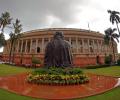
Sources said former Congress chief Sonia Gandhi will write to Prime Minister Narendra Modi for early passage of the bill in the Lok Sabha during the upcoming session as the same has already been passed by the Rajya Sabha.

The dinner Jill Biden and her husband US President Joe Biden hosted for Indian prime minister Narendra Modi, June 22, at the White House brought together, Indians and Americans from so many firmaments.
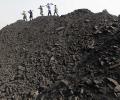
Realistically, coal will be the major fuel for electricity generation in India, as in America, for a long time.

Policy with regard to the foreign banks is part of his five pillars of reforms, says RBI Governor.

An alumnus of St Stephen's College, Delhi, his professional career began in the early 1990s. He completed a Master's degree in international affairs from Columbia University during 1996-98. And an MBA from Northeastern University, Boston.

Studies suggest net benefits of hydro-power, nuclear energy or natural gas as sources of electricity are greater than those of wind and solar.

India's growth in the last three financial years has averaged just 1.9%. It is natural to project rapid growth from this low base. Crucial to that would be the assumption that the economy has suffered no lasting damage from the pandemic, observes T N Ninan.

The Indian startup ecosystem has lauded the inclusion of startups in the New Delhi Leaders' Declaration for the first time ever in the history of G20. Industry stakeholders say that the move will lead to easier access to capital, reduce regulatory hurdles, and may revive funding activity. The Declaration, through the Startup20 initiative, recognised startups as "natural engines of growth" and key to socio-economic transformation by driving innovation and creating employment.

The residents of Delhi stand to lose 10 years of life expectancy if the current air pollution level persists.

There is no dearth of political will today to act against corruption and officers should take action against the corrupt, however powerful, without any hesitation, Prime Minister Narendra Modi said on Monday.

'An area of land has already been earmarked for their protected habitation.' 'There are also steps being taken to take care of the coral zone and mangroves.'

'When you need to revive the economy, when you need to revive aggregate demand, you cut taxes.' 'But what's this government doing?' 'It's increasing taxes for the middle class and the vast majority of the poor on fuel, which has a ratchet effect on most other products.'

'There's no pro-China tilt in BRICS.' 'All these countries want to be close to China, but they are all good friends of India also.'

The Union Budget on Wednesday outlined several initiatives to drive India's technology agenda and boost digital infrastructure, including new centres of excellence for artificial intelligence, National Data Governance Policy, and Entity DigiLocker.
Most forecasts do not have a track record of transparency and accuracy

India's economic image is not affected due to Adani Group's recent decision to pull out Rs 20,000 crore FPO (follow-on public offers) amid allegations of financial wrongdoings, Finance Minister Nirmala Sitharaman said on Saturday.
This is a terrible situation for a growing economy to be in, and the central bank would be expected to act to correct the situation.

'Washington appears to be playing the long game, and making the argument to India that over the longer term, Russia -- sanctioned, cash-strapped, isolated by the West -- will no longer be a viable defence partner for India'

The survey will encompass various indicators of backwardness such as occupation, educational qualification along with the type of educational institutions attended by members of the households to gauge the social and educational conditions of the backwardness in Odisha, the official said.

The challenge is to enhance opportunities for people to generate livelihoods through entrepreneurship, both big and small, argues R Jagannathan.

The government on Monday budgeted Rs 1.75 lakh crore from stake sale in public sector companies and financial institutions, including 2 PSU banks and one general insurance company, in the next fiscal year beginning April 1. The amount is lower than the record Rs 2.10 lakh crore which was budgeted to be raised from CPSE disinvestment in the current fiscal year. However, the COVID-19 pandemic impacted the government's CPSE stake sale programme, and the target has been lowered to Rs 32,000 crore in the Revised Estimates.

What some of our leaders were up to on Friday, November 11.
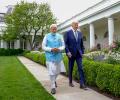
'India will want a lot of help from the US, but it's not going to want US troops.'

'We are receiving a steady stream of interest from well-established foreign universities.'

India maintained 43rd rank on an annual World Competitiveness Index compiled by the Institute for Management Development (IMD) that examined the impact of COVID-19 on economies around the world this year. The 64-nation list was led by Switzerland, while Sweden has moved up to the second position (from sixth last year), Denmark has lost one place to rank third, the Netherlands has retained its fourth place and Singapore has slipped to the fifth place (from first in 2020). At eighth, Taiwan reached the top-10 for the first time since the ranking began 33 years ago (moving up from 11th last year).
 © 2026 Rediff.com - Advertise with us - Disclaimer - Privacy Policy - Sitemap - Feedback - About us - Terms of use - Grievances